

Women In Leadership | An Interview with Valentina Dunoski
A creative person, a strong woman and a passionate leader, we caught up with Valentina on her journey into leadership as Head of Product.
Career
Always a creative at heart, Valentina dreamed of a career in the performing arts, but it took a slightly different turn and instead she completed a Business degree at the University of Technology, Sydney. Shortly after completing her degree, she landed her first role in marketing where she found herself stuffing envelopes, but she has most definitely come a long way since then. Valentina got a taste of Product whilst at Optus and her journey has only got more exciting since. Whilst at Optus, they formed a partnership with American Express, which led to her next role with them, where she developed the first pre-approved marketing campaign. Moving through the Financial Services industry, she has brought to life new products, created high performing teams and grown digital portfolios from a vision to something tangible. From working on an industry-first B2B App store whilst at Commonwealth Bank to delivering Apple Pay, Google Pay & Samsung Pay whilst at Cuscal, Valentina’s experience is nothing short of impressive.
Valentina’s journey has not been without its setbacks and challenges, but she has always taken this in her stride and has been able to take something away from every situation whether it has been positive or not.
Leadership
Unconscious bias has been visible in some organisations in Valentina’s career. Being a female leader, she has been exposed to being told she cares too much, but for her, the most rewarding aspect of being a people leader is to genuinely make a difference in someone’s career.
Valentina likes to nurture her team to help them grow and is a firm believer in focussing on someone’s strengths, as they then become stronger and excel further. She finds if you focus on their weaknesses, it undermines them and destabilises them in their roles.
Qualities as a Leader:
- Democratic – likes to take the team on the journey and work collaboratively.
- Personable – team will always know where they are at in their role but she always wants to know what’s important to them as an individual.
Mentors
Valentina has had a number of different mentors and leaders that she has admired, both male and female, and she has taken away different qualities and aspects from each. Female leaders have taught her to have passion and vision but to combine this with always having your facts right. Male mentors have had an ability to anchor themselves and have taught her to trust in her own ability.
Teams
Particularly in Product / Technology and financial services, Valentina finds it can be challenging building a gender diverse team. The challenges can be down to numbers of applications that she receives in the first instance and it will generally be more male heavy. When thinking back about her teams, she has found that often the women in them will have needed more encouragement to step up into new roles.
However, Valentina doesn’t agree with positive discrimination, ultimately the role should go to the best person for the job. She finds that this adds to the stigma around Women on Boards only being there to fill a quota rather than getting there on their merit and thinks it has a negative effect.
Advice
Valentina believes that, as women, we need to make sure we support each other and not tear each other down. Her advice to women starting out their career in Technology is to:
- Find your personal resilience.
- Set your vision and mindset to what you desire, there will be setbacks but you need to dust yourself off and keep going.
- Maintain who you are, your integrity and your authenticity.
An incredibly honest and creative woman, whose passion lies in seeing her teams succeed and she definitely has a lot of successes to celebrate. It was an absolute pleasure learning about her journey.

PRA 2026/2027 Market Salary Survey Report
I've been placing software engineers for 21 years. I've lived through the cloud boom, the DevOps explosion, the great TypeScript migration. I thought I'd seen every iteration of "we need someone who can do X but we have no idea what X actually means." Then came the AI engineer. First, Let's Get the Title Right Before I talk about the market, I need to address something that causes genuine confusion, for clients, for candidates, and honestly sometimes for me. When a hiring manager tells me they need an "AI engineer," they almost certainly don't mean someone who trains large language models from scratch or has a PhD in machine learning. That's a different discipline entirely- closer to research science than product engineering. The role that's suddenly in enormous demand is something different: a software engineer who can build production systems that use AI as a component. Think of it this way. An ML engineer builds the engine. An AI engineer builds the car. In practice, this means: integrating LLM APIs (OpenAI, Anthropic, Google Gemini) into applications; building retrieval-augmented generation (RAG) pipelines; working with vector databases; designing agentic workflows; evaluating and monitoring AI outputs in production. These are fundamentally software engineering problems: system design, reliability, latency, cost, security, with a layer of AI-specific thinking on top. The industry hasn't fully settled on a consistent job title yet. You'll see the same role advertised as "AI Engineer," "Applied AI Engineer," "LLM Engineer," or just "Senior Software Engineer (AI focus)." The ambiguity is real, and it's one of the first things I have to untangle with every new client brief. The Australian Market: Hot Demand, Thin Supply The numbers are hard to ignore. AI Engineer is now the fastest-growing role in Australia. References to AI in Australian job postings on Indeed more than doubled in a single year, from 3.3% to 6.2% of all postings between early 2025 and early 2026, with software development roles at the sharp end of that shift. Roles with genuine AI fluency are commanding salary premiums of 20–30% over comparable non-AI engineering positions. My clients are feeling this. Across the boards I work with: fintechs, scaleups, enterprise software companies, there is a consistent story: they know they need to ship AI features, they have budget, and they cannot find engineers who can actually do it. Here's the problem I keep running into: there hasn't been enough time for the commercial talent pool to develop. The generative AI wave that changed everything, the one that made RAG pipelines and LLM integration a core engineering skill, is, in real terms, only about two years old in terms of production deployment. ChatGPT launched publicly in late 2022. The tooling matured through 2023. The first wave of serious commercial AI products in Australia started shipping in 2024. That's not a long runway. Compare this to cloud engineering, where engineers had close to a decade of AWS/Azure production experience before "cloud engineer" became a standard hiring category. AI engineering doesn't have that history yet. The engineers who genuinely know how to build and ship robust AI systems in production, not just prototype a chatbot, but properly architect it, evaluate it, handle failure modes, manage cost and latency at scale, are rare because the opportunities to gain that experience commercially have only recently existed. This is compounded by the fact that Australia's enterprise AI adoption has been cautious. A 2024 Deloitte survey found 49% of Australian business leaders cited skills shortage as the biggest barrier to AI adoption. 14 percentage points above the global average. Two-thirds of Australian SMBs now say they use AI, but only around 5% report genuinely capturing meaningful business value from it. A lot of what's been happening is experimentation and proof-of-concept work, not production systems at scale. That means fewer engineers have been able to rack up the kind of real-world reps that make a strong CV. The result: a very small pool of candidates who have done this properly, significant competition for every credible one of them, and a large pool of engineers who are trying to break in but haven't had the opportunity yet. What I See Clients Getting Wrong A few recurring mistakes on the hiring side that I'll flag here, diplomatically: Conflating AI engineers with data scientists or ML engineers. These are related disciplines, not interchangeable ones. If you're building a product feature powered by an existing LLM API, you need strong software engineering skills plus AI-specific knowledge. You probably don't need someone who can train neural networks from scratch. Writing job descriptions that are unrealistic. I regularly see briefs asking for "5+ years of AI engineering experience" in a field that barely existed three years ago in commercial form. This immediately signals to candidates that the hiring team doesn't understand the space - which is its own problem for attraction. Undervaluing strong software engineers who are AI-curious. Some of the best hires I've made in this space have been excellent engineers with 7–10 years of backend or full-stack experience who have been actively learning AI engineering in the past year. They may not have two years of production LLM work on their CV, but they know how to build real systems- and that foundation matters enormously. Overindexing on the AI part, undervaluing the engineering part. I've seen candidates with impressive prompt engineering skills who struggle with the actual systems work - API design, observability, handling failures gracefully, thinking about scale and cost. The engineering fundamentals still matter, perhaps more than ever. Advice for Software Engineers Who Want to Move into AI Engineering If you're a software engineer reading this, and you're wondering how to position yourself in this market; here's my honest read on what will actually move the needle for you. Build something real, and deploy it. Side projects matter here more than almost any other discipline I recruit in, because commercial experience is scarce. A RAG-powered app, an AI agent that does something genuinely useful, an internal tool you built for your current employer. Anything that demonstrates you've grappled with the actual engineering problems: chunking strategies, retrieval quality, prompt design, evaluation, cost management, latency. Running a notebook locally doesn't count. Shipping something does. Get serious about the core infrastructure skills. The AI engineering stack is not just "call an LLM API and return the response." The engineers who stand out know how to work with vector databases (Pinecone, Weaviate, Chroma, pgvector), understand embedding models and retrieval mechanics, can design and evaluate a RAG pipeline, and know how to use orchestration frameworks like LangChain or LlamaIndex without treating them as black boxes. These are learnable skills, and there are good resources to learn them, but you need to have actually used them. Understand evaluation. Seriously. One of the most under-appreciated skills in AI engineering is knowing how to measure whether your system is working. LLMs don't fail like traditional software. They degrade gradually, hallucinate plausibly, and behave differently across context windows. Engineers who know how to design evaluation frameworks, set up observability, and catch regressions are genuinely rare. This is an area where even experienced engineers often have gaps. Know your way around at least one major cloud AI ecosystem. AWS Bedrock, Azure OpenAI, Google Vertex A - your clients will likely be deployed on one of these, and knowing how the managed AI services integrate with the surrounding cloud infrastructure (IAM, VPCs, logging, cost controls) is commercially valuable. Pure API knowledge isn't enough at scale. Don't neglect the software engineering fundamentals. This sounds obvious, but it's worth saying: the engineers who succeed in this space are good engineers first. System design, API design, testing discipline, observability, performance thinking. These skills matter as much in AI systems as in any other distributed system, arguably more, because the failure modes are less predictable. Start contributing to the conversation publicly. In a market where most hiring managers can't fully assess AI engineering skills themselves, visible work carries outsized weight. Write about what you've built. Contribute to open-source projects in the AI tooling space. Speak at a local meetup. Not as a marketing exercise but as a forcing function to actually think deeply about what you're doing and why. The engineers who are landing the best roles right now are often the ones who've been visible in the community. Consider the adjacent roles as a stepping stone. If you're a backend engineer at a company that's starting to build AI features, raise your hand to be involved, even if it's not your primary responsibility. Contributing to an AI feature at your current employer is a far faster path to credible experience than studying alone. The commercial context: the real constraints of production systems, business requirements, reliability expectations, is where the genuine learning happens. Where This Market Is Heading The demand isn't slowing down. The Tech Council of Australia projects around 200,000 AI-related jobs in Australia by 2030. The shift from AI experimentation to AI in production (which is the phase we're entering now, with over half of Australian organisations expecting to have AI experiments in production by mid-2026) means the appetite for engineers who can actually ship this stuff will only grow. The supply shortage will ease over the next few years as more engineers accumulate real experience and training programs catch up. But right now, the gap between what clients need and what the market can supply is real, and it's significant. For software engineers, the window to establish yourself in this discipline, before it becomes as competitive as cloud or DevOps, is open. But it's not infinitely open. The engineers who are building genuine skills and shipping real things now will be well placed when the next wave of hiring accelerates. For my clients: the talent is out there, but you may need to think differently about what the profile looks like. The best AI engineers aren't always the ones with the most AI on their CV, sometimes they're excellent software engineers who've been investing in this seriously and just need the opportunity to prove it in production. That's what I'm here to help you find. I am a software engineering/ AI engineering recruiter based in Melbourne, Australia, specialising in placing engineers across product, platform, and AI engineering roles. If you're hiring or looking, get in touch! Lindie.Graham@pra.com.au
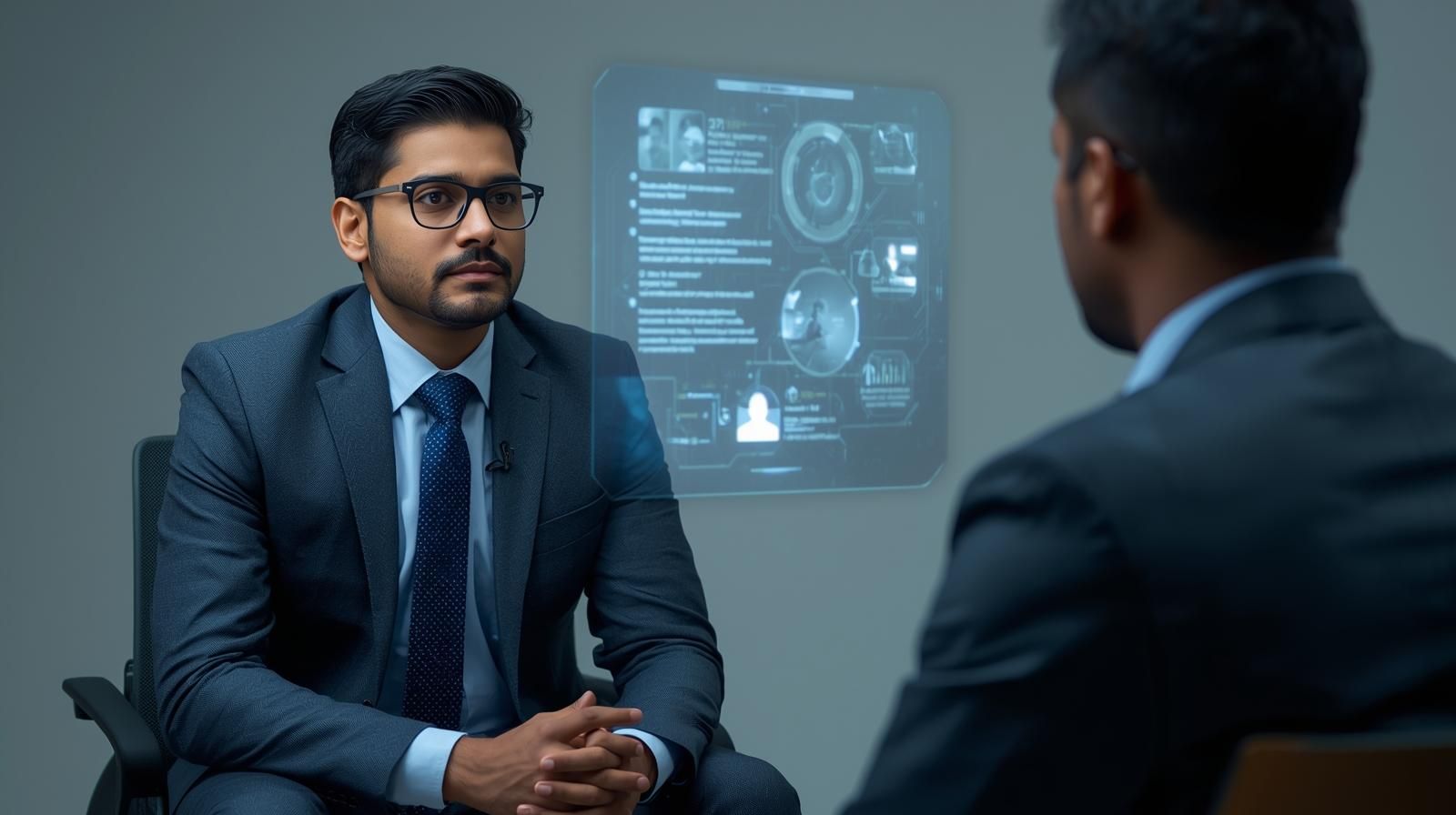
Somewhere in the world right now, a hiring manager is asking a question… and three seconds later ChatGPT is answering it.